


Cataract surgery can make an extraordinary difference to everyday vision. Colours appear brighter, details become sharper and activities that once felt difficult can become enjoyable again. But what happens when, months or even years later, that familiar mistiness begins to return? For some patients, the experience can feel remarkably similar to the symptoms they had before their original cataract operation.
The reassuring news is that cloudy vision after cataract surgery does not necessarily mean something has gone wrong with the artificial lens. One possible explanation is posterior capsule opacification (PCO), a common postoperative change that can often be treated with a short laser procedure. However, blurred vision can have several causes, so understanding when the symptoms began and arranging an appropriate eye examination are important first steps.
Vision may gradually become hazy, with reduced contrast or increased sensitivity to bright lights.
Cells remaining after cataract surgery can cause the thin capsule supporting the lens implant to become cloudy.
When PCO is confirmed, a short outpatient laser procedure can create a clear opening in the affected capsule.
Can Cataracts Come Back After Surgery?
Once a cataract has been removed, it cannot grow back. During cataract surgery, the eye’s cloudy natural lens is replaced with a clear artificial intraocular lens (IOL). A thin membrane called the posterior capsule is normally left behind to support the implant. Although the original cataract is gone, this capsule can sometimes become cloudy as residual lens cells multiply and migrate across its surface.
This condition is known as posterior capsule opacification, sometimes informally called a secondary cataract. It is not a new cataract, and it does not mean the replacement lens has failed. PCO can develop months or years after surgery, gradually interfering with the passage of light through the eye. Patients who previously enjoyed clear vision may begin noticing glare, reduced sharpness or difficulty reading again.
What Are the Signs of Posterior Capsule Opacification?
PCO often develops gradually, making the early changes easy to overlook. Some people notice that their glasses no longer seem as effective, while others struggle with headlights when driving at night or find that text on a screen appears less distinct. The symptoms can resemble those of the original cataract, although their severity and progression vary between patients.
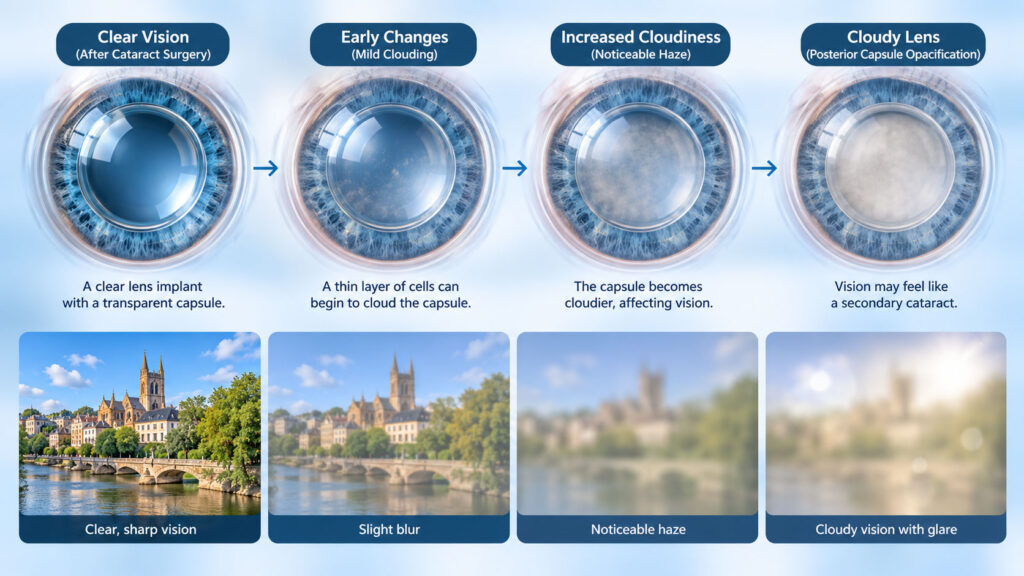
Objects may look less defined, even when wearing your usual glasses.
Headlights, streetlights and bright sunlight may become increasingly uncomfortable.
Colours may appear less vivid, while fine details become harder to distinguish.
Small print and digital screens may become harder to see comfortably.
Is Cloudy Vision After Cataract Surgery Always Caused by PCO?
No. Although posterior capsule opacification is a recognised cause of blurred vision after cataract surgery, other eye conditions can produce similar symptoms. Dry eye, changes in prescription, corneal swelling and retinal conditions may all affect visual clarity. Cystoid macular oedema, for example, involves swelling in the central retina and can develop following cataract surgery. The timing of symptoms is particularly important because blurred vision immediately after an operation may have a different explanation from vision that gradually deteriorates several years later.
Dr Fadi Kherdaji will assess the eye to identify the underlying cause before recommending treatment. This may include examining the lens implant and posterior capsule, checking eye pressure and evaluating the retina where appropriate. A correct diagnosis matters because YAG laser treatment is intended for visually significant capsule clouding and will not resolve blurred vision caused by unrelated conditions.
Sudden loss of vision, severe eye pain, increasing redness, new flashes of light, a sudden shower of floaters or a dark curtain across your sight require urgent ophthalmic assessment. These symptoms should not be assumed to be posterior capsule opacification. Contact your surgical team or an urgent eye care service promptly.
How Does YAG Laser Capsulotomy Restore Clear Vision?
When posterior capsule opacification is confirmed as the cause of reduced vision, YAG laser capsulotomy may be recommended. Unlike cataract surgery, this procedure does not involve removing or replacing the artificial lens. Instead, a specialised laser creates a small opening in the cloudy posterior capsule, allowing light to pass more freely towards the retina. The treatment is usually performed during an outpatient appointment using a microscope-based laser system.
At his Cheltenham clinic, Dr Fadi Kherdaji offers YAG laser capsulotomy for patients experiencing cloudy vision after cataract or lens replacement surgery. The procedure itself generally takes only a few minutes, although additional time is required for examination, preparation and monitoring. As with any eye treatment, potential risks and expected benefits are discussed before proceeding.
Confirm whether PCO is responsible for the reduction in vision and assess overall eye health.
Eye drops may be used to dilate the pupil, and the eye is positioned at the laser microscope.
Precisely focused laser pulses create an opening in the cloudy posterior capsule.
Follow-up advice is provided, including any required pressure checks and symptoms to watch for.
How Quickly Does Vision Improve After YAG Laser Treatment?
Many patients notice clearer vision within hours or over the following days, although recovery varies and improvement depends on the health of the rest of the eye. Temporary blurring from dilating drops and small floaters can occur after treatment. Some patients may need additional monitoring or medication, particularly if they have other eye conditions or risk factors. Although YAG capsulotomy is generally effective, complications such as raised eye pressure, inflammation or retinal detachment can occur, and patients should understand the warning signs.
Most people can return to normal daily activities relatively quickly, but driving should be avoided until vision has recovered sufficiently and the clinic has confirmed it is safe. Following the instructions provided by your ophthalmologist is particularly important after any eye procedure. Patients can also refer to Dr Fadi’s laser and lens aftercare guidance for general information, although their individual postoperative instructions should always take priority.
Can Posterior Capsule Opacification Happen More Than Once?
YAG laser capsulotomy creates a permanent opening in the posterior capsule, so the same area does not normally become cloudy again. Most patients require only one treatment per affected eye. However, vision can change for other reasons over time, including age-related retinal conditions, changes to the ocular surface or new refractive needs. If blurred vision returns after YAG treatment, a further examination is necessary rather than assuming that the capsule has become cloudy again.
Protecting Your Vision After Cataract Surgery
Clear vision following cataract surgery depends on more than the artificial lens alone. The cornea, retina, optic nerve and ocular surface must all function together to produce a sharp image. Attending recommended follow-up appointments and reporting changes in vision can help identify postoperative concerns before they begin to interfere significantly with daily life.
For patients considering surgery for the first time, understanding the possible long-term changes is part of making an informed decision. Dr Fadi Kherdaji provides private cataract surgery in Cheltenham, with personalised assessments and a choice of intraocular lens technologies according to individual suitability. From selecting the appropriate lens to monitoring vision after surgery, careful planning and continued eye care remain central to maintaining good visual outcomes.
Frequently Asked Questions About Cloudy Vision After Cataract Surgery
Is it normal for vision to become cloudy months after cataract surgery?
Cloudy vision months or years after cataract surgery can occur because of posterior capsule opacification. However, other eye conditions can cause similar symptoms, so an examination is needed to establish the cause. Gradual changes should be assessed, while sudden visual deterioration requires urgent attention.
Does YAG laser treatment hurt?
YAG laser capsulotomy is usually well tolerated and performed without an incision. Anaesthetic drops may be used, and patients can notice flashes of light or clicking sounds during treatment. Mild discomfort is possible, but significant pain afterwards should be reported promptly.
Will I need another cataract operation?
If posterior capsule opacification is responsible for the blurred vision, another cataract operation is not usually necessary. YAG laser capsulotomy treats the affected capsule without removing the artificial lens. Your ophthalmologist will confirm whether this is appropriate after examining your eye.
Can I drive home after YAG laser treatment?
You should arrange alternative transport following your appointment. Dilating drops can temporarily blur vision and increase light sensitivity, and some patients experience floaters or visual disturbance after treatment. Only resume driving when your vision meets the legal requirements and your clinical team confirms it is safe.
