


SMILE Pro, LASIK, PRK, LASEK Or PRESBYOND®?
Most patients do not begin by asking which laser eye surgery they want. They begin with a much simpler question: where do I start?
SMILE Pro, LASIK, PRK, LASEK and PRESBYOND® can all help reduce dependence on glasses or contact lenses, but they do not work in the same way and they are not designed for the same patient. The real difference is not just in the technology or if you’re suitable for laser eye surgery. It is in how your eyes, your prescription, your age and your lifestyle shape the right choice.
This guide brings the main laser eye surgery options together in one place, so you can understand what each treatment does, why it is chosen, and what makes one approach more suitable than another.
Laser Eye Surgery Overview
| Treatment | How It Works | Best Suited For | Recovery Speed | Main Advantage |
|---|---|---|---|---|
| SMILE Pro | Removes a tiny lenticule through a micro-incision without creating a flap | Short-sighted patients, active lifestyles, patients concerned about dryness | Fast | Minimally invasive with strong corneal preservation |
| LASIK | Creates a thin flap, then reshapes the cornea underneath with laser precision | Many common prescriptions, patients wanting rapid visual recovery | Very fast | Proven, precise and widely suitable |
| PRK | Removes the surface layer and reshapes the cornea without creating a flap | Thinner corneas, certain clinical situations | Slower | No flap and strong long-term outcomes |
| LASEK | Gently lifts the surface layer before laser reshaping, then repositions it | Patients who may suit a surface-based option | Slower | Surface treatment with tissue-preserving benefits |
| PRESBYOND® | Uses blended vision laser treatment to improve near and distance vision | Patients over 40 with reading vision changes | Moderate to fast | Addresses age-related vision changes without relying on reading glasses |
Start With Your Eyes, Not the Procedure
It is easy to assume that laser eye surgery is simply a matter of choosing the newest or most well-known treatment, but that is not how modern refractive surgery works. The starting point is never the procedure itself. It is your eyes.
Every treatment sits somewhere on a spectrum shaped by corneal thickness, prescription strength, tear film quality, age and the way you use your vision each day. Someone who spends long hours on screens, drives regularly at night or plays contact sports may be guided towards a different option than someone whose main concern is reading glasses in their forties.
That is why the best treatment is not the one with the strongest name recognition. It is the one that fits your eye health, your visual demands and your long-term expectations.
Understanding the Main Categories
One of the easiest ways to make sense of laser eye surgery is to stop looking at the names first and instead understand the type of treatment each one represents.
Surface-Based Treatments
PRK and LASEK sit in this category. These procedures work on the outer layer of the cornea and do not involve creating a corneal flap. They are often considered when preserving corneal structure is especially important or when the cornea is thinner than ideal for other procedures. Recovery is slower than LASIK or SMILE Pro, but long-term results can still be excellent.
Internal Corneal Treatments
LASIK and SMILE Pro are both designed to correct vision by changing the shape of the cornea from within or beneath the surface. They are more commonly associated with faster recovery and a quicker return to normal daily life. Although they are often spoken about together, the way they achieve their results is quite different.
Functional Laser Correction for Ageing Eyes
PRESBYOND® sits slightly apart. It is not simply about correcting short-sight or astigmatism. It is designed for patients whose vision is changing with age, particularly when reading becomes more difficult and distance vision is no longer the only priority. The focus here is balance, helping patients use their eyes more naturally across different distances.
SMILE Pro: The Modern Minimal Approach
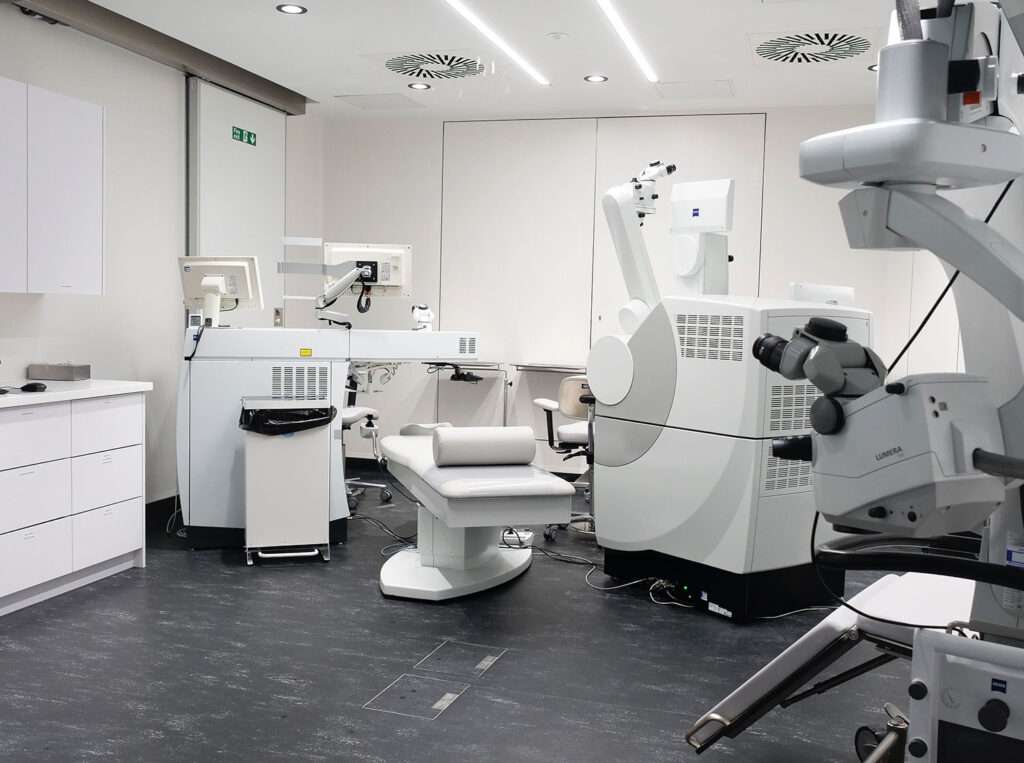
SMILE Pro represents one of the most advanced developments in laser eye surgery. Rather than creating a flap on the surface of the cornea, it uses a femtosecond laser to create a small lenticule within the cornea, which is then removed through a micro-incision. This changes the shape of the cornea while preserving more of its natural outer structure.
For many patients, that matters. It means the treatment feels more contained, the surface of the eye is disturbed less, and the recovery process can feel smoother. This is one of the reasons SMILE Pro is often discussed in relation to comfort, stability and reduced dryness compared with older approaches.
A typical SMILE Pro patient might be in their twenties or thirties, short-sighted, active, and tired of the daily cycle of glasses or contact lenses. They may want a modern treatment with minimal interference to the eye and a quick return to work, exercise and normal life. For that patient, SMILE Pro often feels like a natural next step.
LASIK: The Proven Standard
LASIK remains one of the best-known and most widely performed forms of laser eye surgery in the world. Its reputation has not come from marketing alone, but from decades of refinement, predictable outcomes and strong patient satisfaction. It works by creating a thin flap on the cornea, reshaping the tissue underneath with an excimer laser, and then repositioning the flap.
What continues to make LASIK so popular is the speed of visual recovery and the broad range of prescriptions it can treat. Many patients notice a significant improvement in vision within a very short time, and that speed still appeals strongly to people balancing work, travel and busy routines.
A common LASIK patient may have worn contact lenses comfortably for years but now wants something permanent and reliable. They may be looking for a tried-and-tested treatment with a long clinical track record, especially if their eyes are healthy and their prescription sits comfortably within the treatment range. For that patient, LASIK often feels reassuringly established.
PRK: A Surface Option with Long-Term Strength
PRK is one of the original forms of laser vision correction and still has an important place in modern refractive surgery. Instead of creating a flap, the surgeon removes the outermost layer of the cornea before reshaping the tissue underneath with laser treatment. The surface then heals naturally over time.
The recovery is slower than LASIK or SMILE Pro, and patients need to be prepared for that. The first few days can be more uncomfortable, and visual stability takes longer to settle. But PRK remains a valuable option for patients who may not be ideal candidates for flap-based surgery.
Someone with a thinner cornea, a physically demanding job or a clinical reason to avoid flap creation may be guided towards PRK. It is not the fast-track option, but it can be the right one when long-term structural considerations matter more than short-term convenience.
LASEK: A Gentle Surface-Based Alternative
LASEK is often discussed alongside PRK because both are surface-based procedures, but the technique is slightly different. In LASEK, the outer layer of the cornea is loosened and moved aside before laser treatment, then repositioned afterwards. It still involves surface healing and a longer recovery than LASIK or SMILE Pro, but it can be useful in certain clinical situations.
For patients, the main point is not to get lost in the technical distinctions between PRK and LASEK, but to understand why a surgeon may recommend a surface approach in the first place. These procedures are often chosen not because they are less advanced, but because they are more appropriate for the structure of the individual eye.
A patient who does not quite suit LASIK or SMILE Pro may still achieve an excellent long-term result with LASEK. The journey starts more slowly, but the destination can be just as strong.
PRESBYOND®: Laser Eye Surgery for Changing Vision After 40
PRESBYOND® is designed for a different kind of patient journey. This is usually the person who has begun to notice that reading has become more awkward, menus need to be held further away, or the phone is constantly being adjusted to find a comfortable focal point. Distance vision may still be good, but the visual system no longer works as easily across all ranges.
Rather than treating this like standard short-sight or long-sight, PRESBYOND® uses a blended vision approach. The treatment is planned so that the eyes work together across near, intermediate and distance ranges in a way that feels natural once the brain adapts. It is not about giving both eyes exactly the same job. It is about creating a more functional visual system for modern life.
A typical PRESBYOND® patient is in their forties or fifties and wants more freedom from reading glasses without moving straight into lens-based surgery. For the right person, it can offer a highly effective bridge between youthful vision and the changes that come with age.
What Is All the Fuss Really About?
The reason patients hear so much about these procedures is not because every clinic is offering five versions of the same thing. It is because laser eye surgery has become more refined, more personalised and more specific to your perscription limit. The fuss exists because there is no longer a single pathway for everyone.
Years ago, the conversation may have centred around LASIK alone. Today, surgeons can be far more precise in matching the treatment to the eye. That means a patient who is short-sighted and active may be directed towards SMILE Pro, a patient with a thinner cornea may be better suited to PRK or LASEK, and a patient whose reading vision is changing may benefit more from PRESBYOND®.
What looks confusing on the surface is actually a sign that the field has matured. More choice, when guided properly, usually means a better fit and a better outcome.
Where Should You Start?
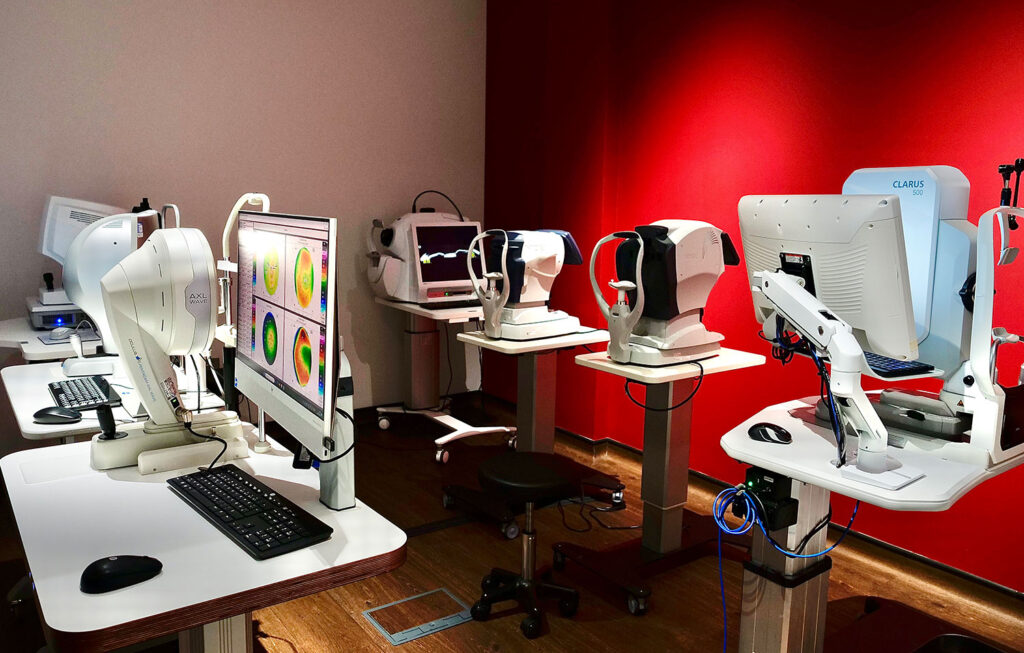
The starting point is not choosing a treatment from a menu. It is having your eyes properly assessed. A full consultation should map the shape of the cornea, assess the tear film, measure the prescription accurately and explore how you use your vision in everyday life. From there, the treatment pathway becomes much clearer. What often feels confusing before diagnostics becomes far more straightforward afterwards.
That is also why patients should be cautious about trying to self-select the right laser eye surgery too early. Research is helpful, but it is not a substitute for knowing how your eye structure and visual needs align with the available options.
The Real Difference Between These Treatments
The difference between SMILE Pro, LASIK, PRK, LASEK and PRESBYOND® is not just technical. It is personal.
Two patients can walk into the same clinic and leave with completely different recommendations, not because one treatment is better than another in a universal sense, but because the best treatment depends on what their eyes need and how they want to live afterwards. That is the real shift in modern laser eye surgery. The question is no longer which treatment is best in general. The more useful question is which treatment is best for you.