


As we grow older, every part of our body experiences gradual biological ageing, including our eyes. Vision changes, slower healing, dry eyes, cataracts and age-related retinal conditions all become more common with age. This has led researchers to investigate whether compounds that support healthy cellular ageing may also help maintain long-term eye health.
One supplement attracting increasing scientific interest is Nicotinamide Mononucleotide (NMN). Although research is still developing, NMN has become one of the most studied longevity supplements because of its role in supporting the body’s natural production of NAD+, a molecule essential for healthy cellular function. While NMN should never be considered a treatment for eye disease, early laboratory and animal studies suggest it may play a supportive role in maintaining healthy eye tissues as we age.
What Is NMN?
NMN (Nicotinamide Mononucleotide) is a naturally occurring molecule found in small amounts within the body and in foods such as broccoli, avocado, cabbage and edamame. Its primary role is to act as a precursor to Nicotinamide Adenine Dinucleotide (NAD+), one of the body’s most important coenzymes. NAD+ is involved in:
- Cellular energy production
- DNA repair
- Mitochondrial function
- Inflammation regulation
- Protection against oxidative stress
- Healthy ageing processes
Unfortunately, NAD+ levels naturally decline with age, which is one reason scientists believe our tissues become less efficient at repairing themselves over time.
Why NAD+ Matters for Ageing Eyes
The eye is one of the most metabolically active organs in the human body. The retina alone contains millions of specialised nerve cells that require enormous amounts of energy every second.
Healthy levels of NAD+ help these cells produce energy efficiently, support normal repair mechanisms and protect against oxidative damage. As we get older, NAD+ levels naturally decline, which may reduce the eye’s ability to maintain the same level of cellular resilience.
The retina relies on constant energy production to maintain healthy visual function.
NAD+ supports normal repair processes that become increasingly important with age.
Ageing eye tissues are more vulnerable to oxidative stress and inflammation.
This is why NMN has become an area of growing interest within ophthalmology research. By supporting the body’s natural production of NAD+, researchers are exploring whether it may help maintain healthier cellular function within the eye as we age.
What Does Current Research Suggest?
Most of the research into NMN and eye health is still in its early stages. While laboratory studies and animal models have produced encouraging findings, large-scale human clinical trials remain limited. Recent scientific reviews suggest that NMN shows promise as a future area of research for ocular disease, but further clinical evidence is needed before its effectiveness in patients can be confirmed. View PubMed study
Much of the interest centres around NMN’s ability to increase levels of Nicotinamide Adenine Dinucleotide (NAD+), a molecule that plays an important role in cellular energy production and repair. The retina is one of the most energy-demanding tissues in the human body, requiring a constant supply of energy to maintain normal visual function. As NAD+ levels naturally decline with age, researchers believe this may contribute to reduced cellular efficiency, mitochondrial dysfunction and increased oxidative stress within retinal tissues. Read NIH review
Experimental studies have shown that restoring NAD+ levels may help retinal cells produce energy more efficiently while supporting their natural defence mechanisms against oxidative damage. Researchers have also observed improved mitochondrial function, reduced inflammation and greater survival of retinal nerve cells in several preclinical models, suggesting that NAD+ may play an important role in maintaining healthy retinal function as we age. Read supporting research
These findings have generated significant interest within ophthalmology, particularly in relation to age-related conditions such as glaucoma, age-related macular degeneration and diabetic retinal disease. Scientists are investigating whether therapies that increase NAD+ availability could help protect retinal ganglion cells, preserve the tiny blood vessels that nourish the retina and reduce the cumulative effects of cellular ageing. However, it is important to stress that NMN is not currently an approved treatment for any eye condition, and there is insufficient evidence to recommend it as a preventative therapy outside ongoing research.
Clinical References
Nicotinamide Mononucleotide, a Potential Future Treatment for Ocular Diseases
Implications of NAD+ Metabolism in the Aging Retina
NAD+ and Sirtuins in Retinal Degenerative Diseases
Neuroprotective Effects of NMN on Photoreceptors
Could NMN Help Prevent Ageing Eyes?
It is important to understand that NMN is not a cure for ageing, nor has it been proven to prevent eye disease in humans. However, maintaining healthy NAD+ levels may support the body’s normal repair mechanisms and cellular energy production, which become increasingly important as we age.
Many scientists now believe healthy ageing is influenced by maintaining cellular resilience rather than simply treating disease after it develops.
Should You Take NMN?
NMN supplements are becoming increasingly popular among people interested in healthy ageing. Although early evidence appears promising, long-term human studies are still underway.
If you are considering taking NMN, particularly if you have existing eye conditions or other medical conditions, it is sensible to discuss supplementation with your ophthalmologist or GP. Supplements should complement a healthy lifestyle rather than replace medical advice, regular eye examinations or clinically proven treatments.
The Foundations of Healthy Eyes
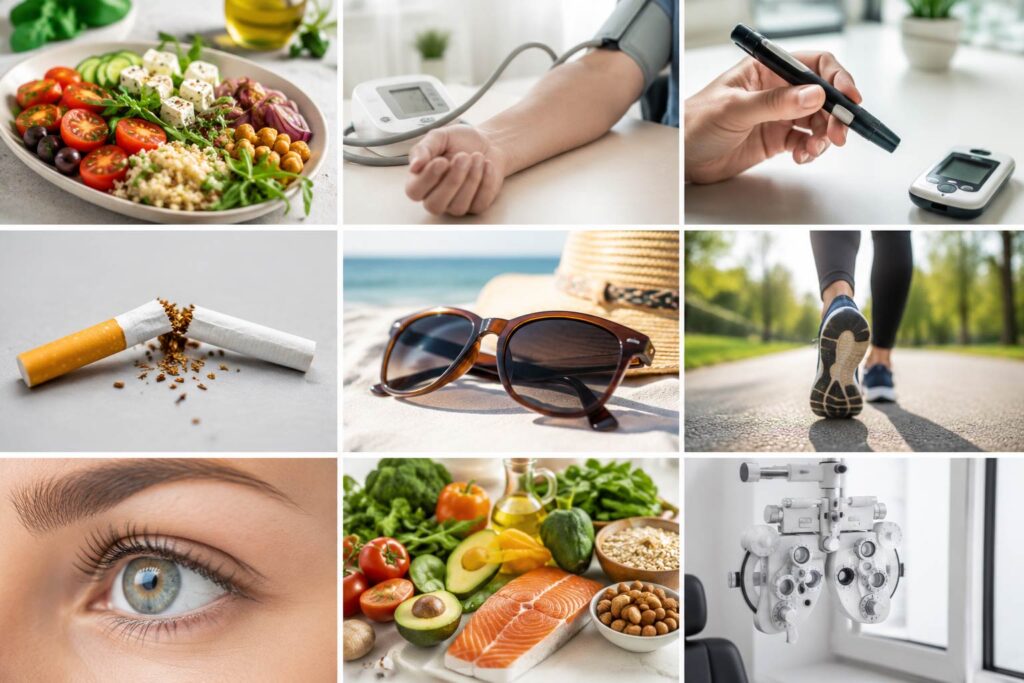
Research consistently shows that overall lifestyle has a much greater impact on long-term eye health than any single supplement. NMN may be an interesting area of research, but the strongest foundation for healthy ageing eyes still comes from the everyday choices that protect the whole body.
Eat Well
A Mediterranean-style diet rich in colourful vegetables, healthy fats and whole foods can help support retinal and vascular health.
Protect Circulation
Healthy blood pressure, cholesterol and blood sugar levels help protect the tiny blood vessels that nourish the retina.
Avoid Smoking
Smoking increases oxidative stress and is strongly linked with several serious eye conditions, including macular degeneration.
Block UV Light
Good quality sunglasses help reduce unnecessary UV exposure, supporting long-term lens and retinal protection.
Stay Active
Regular exercise supports healthy circulation, metabolism and inflammation control throughout the body, including the eyes.
Book Eye Checks
Routine eye examinations remain one of the most effective ways to detect changes early and protect vision over time.
Clinical takeaway: supplements may play a supporting role, but they should sit on top of the fundamentals: good nutrition, healthy circulation, regular movement, UV protection and professional eye care.
Clinical Perspective
NMN represents one of the most exciting areas of modern longevity research. Scientists are increasingly exploring how restoring healthy NAD+ levels may help cells function more efficiently as we age, including those within the eye.
Although human clinical evidence is still evolving, NMN offers an interesting glimpse into the future of preventative medicine. For now, the strongest evidence for maintaining lifelong eye health remains regular eye examinations, a nutritious diet, healthy lifestyle choices and seeking prompt advice if your vision changes.