


Many people spend years wearing contact lenses without ever considering that there may be another option available. For some, contact lenses provide excellent vision and fit comfortably into daily life. For others, they become a constant source of irritation. Dry eyes, lens discomfort, maintenance routines and the ongoing cost of replacement lenses can leave patients wondering whether there is a more permanent solution.
One option that has become increasingly popular is the Implantable Contact Lens, often known as ICL. Unlike traditional contact lenses that sit on the surface of the eye, an implantable lens is positioned inside the eye where it works continuously to correct vision without the need for daily insertion or removal.
So how do the two compare?
The Advantages Of Traditional Contact Lenses
Contact lenses remain a popular choice for millions of people worldwide. They provide clear vision without the weight of glasses and can be an excellent option for active lifestyles. Many patients appreciate the flexibility that contact lenses offer, particularly if they are not yet ready to consider a surgical procedure.
Both contact lenses and Implantable Contact Lenses (ICL) can provide excellent vision correction, but they work in very different ways. The visual comparison below uses simple indicator bars to show how each option compares across comfort, maintenance, long-term convenience and lifestyle freedom.
The Hidden Costs Of Long-Term Contact Lens Wear
Many patients are surprised when they calculate how much they have spent on contact lenses over the years. Monthly lenses, daily disposables, cleaning solutions and regular eye examinations all contribute to the overall cost. There are also practical considerations.
While contact lenses continue to provide excellent vision correction for many people, long-term wear is not always without challenges. As the years pass, some patients begin to notice that their lenses no longer feel as comfortable as they once did. What started as a simple daily routine can gradually become more frustrating, particularly during long working days or extended periods of screen use.
Many long-term contact lens wearers experience symptoms such as dry eyes, irritation, redness and increasing lens intolerance. Some find that their lenses become uncomfortable after only a few hours of wear, while others notice fluctuating vision or a constant awareness that the lenses are present. These issues can be particularly noticeable in air-conditioned environments, during travel, or when spending significant time using computers, tablets and smartphones.
For some patients, these challenges become more apparent with age as the natural tear film changes and the eyes become more susceptible to dryness. This is often the point at which people begin exploring alternative options, such as Implantable Contact Lenses (ICL), which can provide long-term vision correction without relying on a lens sitting on the surface of the eye each day.
What Is An Implantable Contact Lens?
An Implantable Contact Lens (ICL) is a specially designed lens placed inside the eye to correct refractive errors such as:
- Short-sightedness
- Astigmatism
- Higher prescriptions
The lens works alongside the eye’s natural structures to provide clear vision while remaining invisible to others.
Unlike laser eye surgery, no corneal tissue is removed. This makes ICL an excellent option for many patients who may not be suitable candidates for laser treatment due to corneal thickness or prescription limitations.
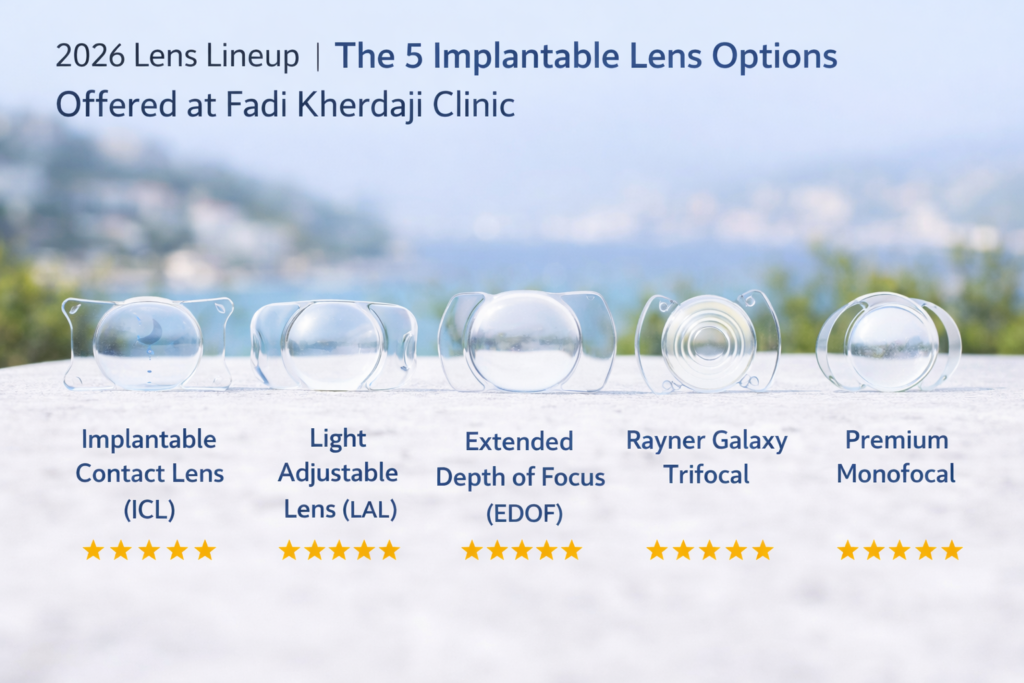
Vision Quality: Contact Lenses Vs Implantable Lenses
One of the most significant differences reported by many patients is visual quality.
Traditional contact lenses sit on the eye’s surface and can be affected by dryness, blinking and environmental factors. Implantable lenses remain permanently positioned within the eye and often provide highly stable vision throughout the day.
Why Do Many Patients Choose Implantable Contact Lenses?
One of the most common reasons patients explore Implantable Contact Lenses (ICL) is the desire for more consistent vision and greater day-to-day comfort. Unlike traditional contact lenses, which sit directly on the surface of the eye, an implantable lens works from within the eye itself. This means vision is not affected by lens movement, dryness or the daily challenges associated with contact lens wear.
👁️ Sharper Vision
Many patients report exceptionally crisp and stable vision throughout the day, particularly those with higher prescriptions.
💧 Less Reliance On Eye Drops
Because there is no lens sitting on the eye’s surface, many patients find they rely less on artificial tears and lubricating drops.
⚡ Consistent Performance
Vision remains stable throughout the day without the fluctuations that can sometimes occur with contact lens wear.
💻 Greater Comfort At Work
Many office workers appreciate the freedom from dryness and irritation during long hours spent using computers and digital devices.
Every patient’s eyes are different, and suitability for Implantable Contact Lenses should always be assessed during a comprehensive consultation. Advanced diagnostic testing helps determine whether ICL is likely to provide the best long-term outcome for your vision and lifestyle.
Of course, individual results vary and suitability must always be assessed during a consultation.
Which Option Is Better For Higher Prescriptions?
Implantable lenses often become particularly attractive. Patients with moderate to high levels of short-sightedness sometimes discover that contact lenses become less practical over time. Implantable Contact Lenses can often correct prescriptions that may fall outside the ideal treatment range for laser eye surgery. We have noticed at the Fadi Kherdaji clinic, they have become an increasingly popular solution for patients seeking long-term visual freedom.
Comparing The Long-Term Commitment
Contact lenses require daily management. You must insert them, remove them, clean them and regularly replace them. An Implantable Contact Lens is designed to remain inside the eye, providing ongoing vision correction without the need for daily maintenance. For many patients, the convenience alone can be life-changing.

Is An Implantable Contact Lens Right For You?
There Is No “Best” Vision Correction Option
One of the biggest misconceptions in vision correction is that there is a single treatment that works for everyone. In reality, the best solution depends entirely on your eyes, your lifestyle and what you want to achieve from treatment.
For example, a professional driver may prioritise night vision performance, while an office worker may want greater comfort during long hours in front of a screen. Someone with a very high prescription may benefit from Implantable Contact Lenses, whereas another patient may be better suited to laser eye surgery.
This is why a detailed consultation is so important. Using advanced diagnostic technology, we can build a complete picture of your eyes and determine whether contact lenses, laser eye surgery or Implantable Contact Lenses are likely to deliver the safest and most effective long-term outcome for your vision.
Contact Lenses Or Implantable Lenses?
There is no universal answer. For some people, contact lenses continue to provide an excellent solution. For others, implantable lenses offer the opportunity to enjoy long-term visual freedom without the daily routine of lens wear. The best choice depends on your individual eyes and lifestyle.
At a consultation with Dr Fadi Kherdaji, we can assess your suitability and explain the options available, helping you make an informed decision about your future vision.