


Most changes in vision do not happen overnight. For many people, they creep in quietly; a little more strain at the end of the day, a slight blur that comes and goes, or lights that feel harsher than they used to. Because these changes are gradual, it is easy to ignore them or assume they are just part of modern life.
In reality, early vision changes often follow recognisable patterns. Understanding what is normal, what is age-related, and when to take action can help protect long-term eye health and avoid unnecessary worry.
Subtle changes that are easy to dismiss
One of the earliest signs that vision is shifting is blur that appears intermittently rather than constantly. You may notice that small text looks softer than it used to, particularly on screens, or that your eyes take longer to refocus when looking up from a phone or laptop. This is often more noticeable in the evening, when visual fatigue has built up.
Glare is another common early symptom. Headlights at night may appear brighter or more scattered, especially on wet roads. Some people describe halos or starburst effects around lights, even though their daytime vision still feels acceptable. These changes are often linked to how light passes through the eye rather than a simple prescription issue.
Screen fatigue has become one of the most widespread complaints in recent years. Tired, dry or heavy eyes after prolonged screen use are frequently dismissed as normal, but persistent discomfort can signal that the visual system is under strain. Reduced blinking, focusing effort and subtle changes in tear quality all play a role here.
Night driving can also become more challenging before people notice changes elsewhere. Difficulty judging distances, increased glare or a sense of visual overload after dark are early indicators that the eyes are working harder than they used to.
Subtle changes that are easy to dismiss
These examples are not a diagnosis; they simply help readers notice patterns. If something feels persistent or is getting worse, it is worth booking an eye assessment.
| Minor changes you might miss | What it can feel like day-to-day | Gentle next step |
|---|---|---|
| Slight blur that comes and goes | Text looks soft at the end of the day; your eyes take longer to “snap” into focus after screens | Track when it happens; if it becomes frequent, book a routine check |
| Holding things further away | Menus, labels and messages feel easier at arm’s length; low light makes it worse | Useful to mention in a check-up; may relate to early presbyopia |
| More squinting than usual | You squint for road signs, subtitles, or laptop text even with “good” eyesight | A quick vision test can confirm whether your prescription has shifted |
| Screen fatigue and dryness | Heavy eyes; stinging; you feel better after blinking or stepping outside | Consider a dry eye check; improve habits and monitor symptoms |
| Mild glare sensitivity | Bright lights feel harsher; sunlight or office lighting bothers you more than before | Mention it at your next exam; ask about contrast and glare testing |
| Slower switching from near to far | You look up from your phone and the room takes a moment to sharpen | Common with visual fatigue; if it worsens, a full assessment helps |
| More significant changes that deserve prompt attention | ||
|---|---|---|
| Major change | How people often describe it | Sensible action |
| Sudden vision change in one or both eyes | A noticeable drop in clarity; distortion; a “curtain” effect; vision feels altered quickly | Seek urgent eye advice rather than waiting for it to pass |
| Halos or glare affecting night driving | Headlights bloom or scatter; you avoid driving at night because it feels unsafe | Book an assessment; ask about glare, contrast sensitivity and lens clarity |
| Frequent headaches linked to focusing | Headaches after reading or screens; eyes feel strained even with breaks | A full refraction and eye health check can identify the cause |
| Double vision or persistent ghosting | Text appears duplicated; lines look shadowed; it doesn’t settle after blinking | Arrange an eye exam promptly to rule out corneal or lens issues |
| Increasing sensitivity to light | Normal indoor light feels uncomfortably bright; you prefer dim rooms | Book a check, especially if it’s new or worsening |
| New floaters with flashes of light | Sudden shower of floaters; flashes in the side vision; visual disturbances | Seek urgent assessment; this should not be ignored |
Note: This table is for education; if you are worried about symptoms, a professional eye assessment is always the best next step.
Vision changes by age: what tends to happen and why
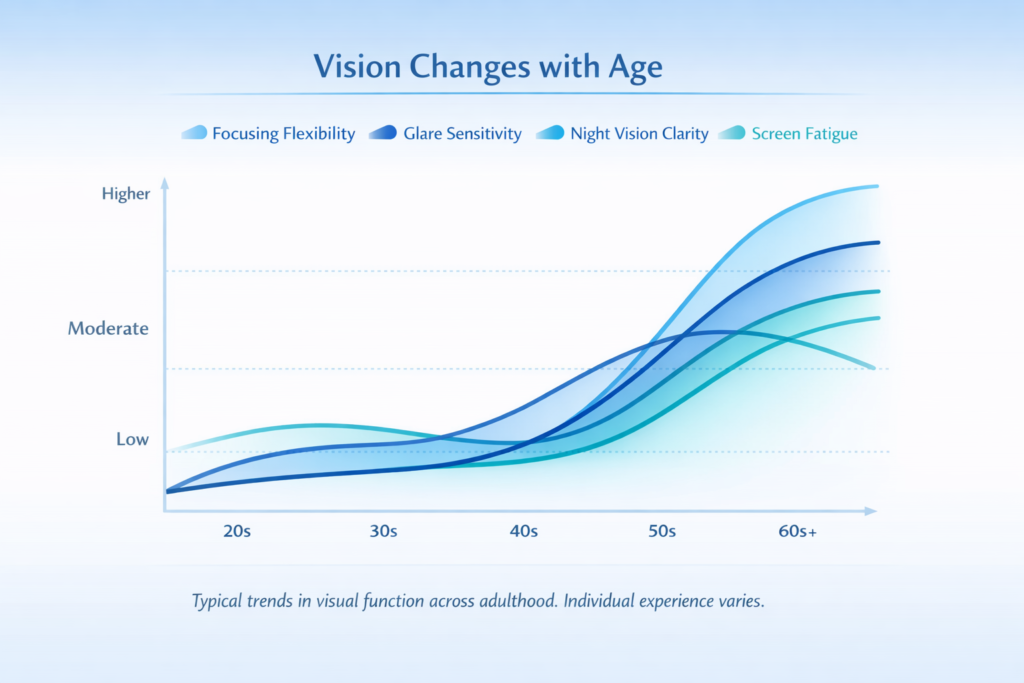
While every set of eyes is unique, certain patterns tend to appear at different stages of life.
In your 30s, vision is often still sharp, but endurance begins to change. Long hours on screens can lead to fatigue more quickly, and focusing flexibility may reduce slightly. You might find that your eyes feel slower to adjust between near and far tasks. These changes are usually functional rather than structural, but they are worth paying attention to.
By the 40s, focusing at close range often becomes more difficult. This is a natural process related to the eye’s internal lens becoming less flexible, a condition known as presbyopia. People may notice that reading in low light is harder, or that holding text slightly further away feels more comfortable. Glare sensitivity and dry eye symptoms also tend to increase during this decade.
In the 50s and beyond, changes in contrast sensitivity and night vision can become more noticeable. Some people experience fluctuations in clarity, especially in challenging lighting conditions. At this stage, it becomes increasingly important to distinguish between normal age-related changes and early signs of eye conditions that benefit from monitoring or treatment.
When normal becomes something to act on
Not every visual change requires immediate intervention, but certain signs should prompt a professional assessment rather than guesswork.
If blur is persistent rather than occasional, if glare or halos interfere with driving, or if eye strain is affecting daily comfort and productivity, it is time to seek advice. Sudden changes should always be checked promptly, even if they resolve on their own.
Many people delay action because they assume glasses are the only option, or that surgery is inevitable. In reality, modern eye care focuses on understanding the cause of the change first. In some cases, simple adjustments or lifestyle guidance are enough. In others, exploring corrective options becomes part of a longer-term plan rather than an immediate decision.
Understanding your options without pressure
One of the biggest misconceptions about vision correction is that it is a one-size-fits-all solution. Laser treatment, lens-based procedures and non-surgical approaches each have their place, depending on age, eye health, long term nutrition and visual needs.
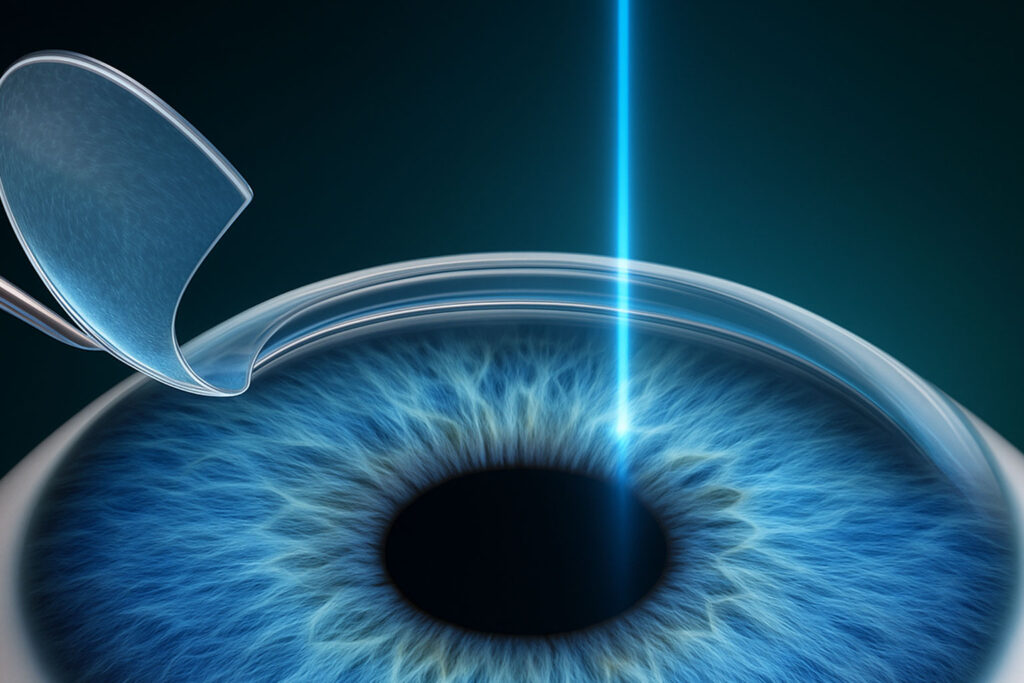
For younger patients, laser vision correction may be an option if the eyes are stable and suitable. For those experiencing age-related focusing changes, lens-based solutions can address both distance and near vision more effectively. In cases where laser is not appropriate, alternatives such as implantable lenses may be considered.
The key point is that early assessment creates choice. Acting sooner does not mean committing to treatment; it means understanding what is happening and planning with clarity rather than reacting later under pressure.
Why early awareness matters
Vision correction is no longer viewed as a single event, but as part of a lifelong approach to eye health. By recognising early signs and responding at the right time, patients preserve more options for the future and avoid unnecessary compromises.
If your vision feels different, even in subtle ways, that awareness is valuable. A calm, informed assessment can confirm whether what you are experiencing is normal, age-related, or something that deserves closer attention. Either way, you gain reassurance and a clearer picture of what comes next.
Often, the best time to act is not when vision has already declined significantly, but when changes first begin to whisper rather than shout.