


A practical decision guide, recovery checklist & vision tracking system
Choosing vision correction isn’t a single decision. It’s a journey that starts with understanding your eyes, continues through treatment, and finishes with protecting the results for years to come.
This guide brings together three practical tools patients often wish they had sooner: a clear way to understand which treatment may suit them, a calm recovery checklist, and a simple system to track vision before and after surgery.
Step One: Understanding Your Options
Every pair of eyes is different. Age, prescription, corneal thickness, lifestyle, and visual expectations all influence which treatment is recommended.
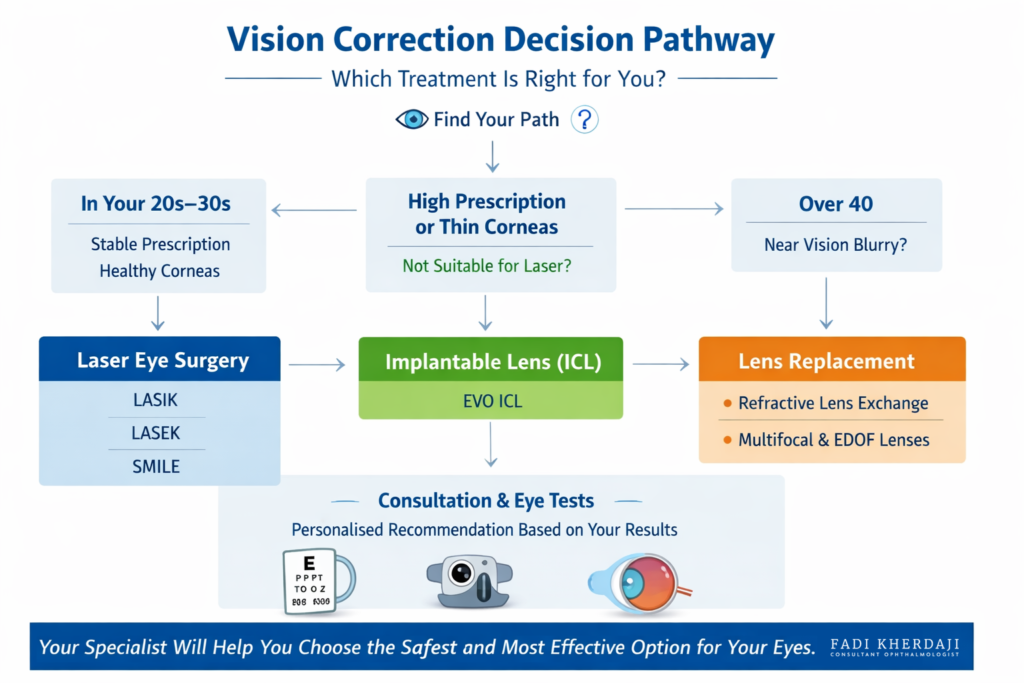
The decision pathway (simplified)
If you are in your 20s or 30s with a stable prescription and healthy corneas, laser-based treatments such as LASIK, LASEK, or SMILE may be suitable.
If your prescription is high, your corneas are thinner, or you’ve been told laser may not be ideal, implantable lenses (ICL) often provide sharper outcomes without reshaping the cornea.
If you are over 40 and noticing near vision changes alongside distance blur, lens-based solutions may offer the most complete correction, addressing both clarity and age-related focusing changes.
This is why consultations are essential. Tests don’t just confirm eligibility, they prevent the wrong treatment being chosen for the wrong reason.
Step Two: Preparing Calmly for Surgery
One of the most common concerns patients have is recovery. Not pain but uncertainty. Knowing what’s normal and what to expect removes much of that anxiety.
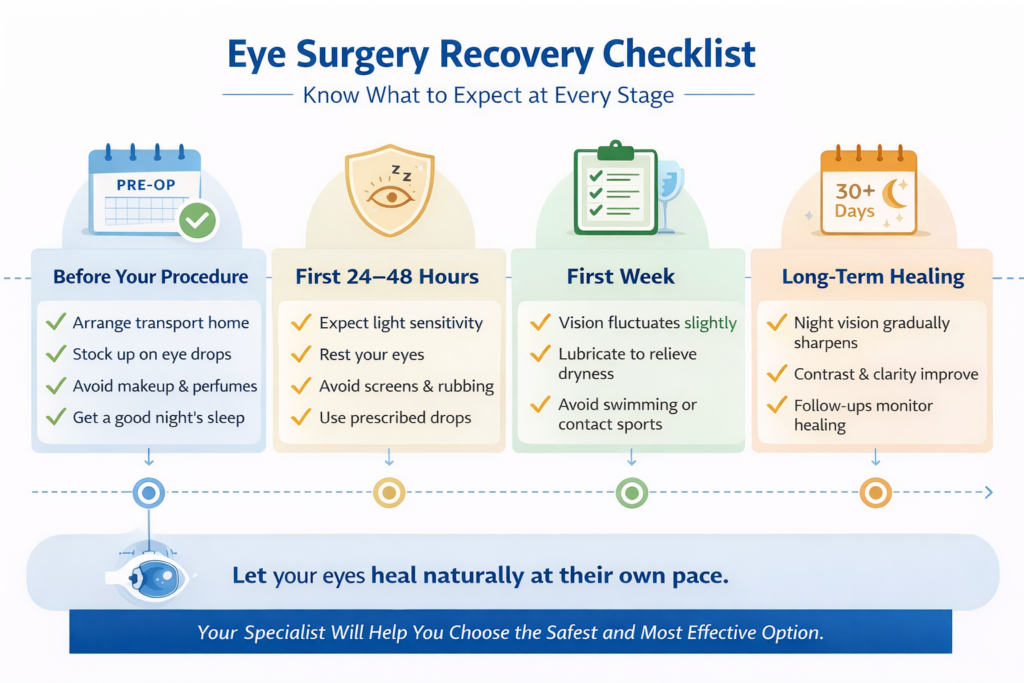
Before your procedure
- Arrange transport home, even if you expect to feel fine.
- Stock up on preservative-free eye drops as advised.
- Avoid eye makeup, creams, or perfumes on the day.
- Get a good night’s sleep, fatigue can heighten sensitivity afterwards.
First 24-48 hours
- Expect light sensitivity, watering, or a gritty sensation, this is normal.
- Rest your eyes as much as possible.
- Avoid screens, rubbing your eyes, and dusty environments.
- Use drops exactly as prescribed, even if your vision already feels clear.
First week
- Vision often fluctuates slightly before stabilising.
- Dryness may come and go, continue lubrication.
- Most people return to work and daily activities quickly, but avoid swimming and contact sports.
Long-term healing
- Night vision sharpens gradually.
- Contrast and clarity continue improving over weeks.
- Follow-up appointments ensure healing is progressing exactly as expected.
Recovery isn’t about rushing, it’s about allowing the eyes to settle naturally.
Step Three: Tracking Your Vision Over Time
Your Pre-Op & Post-Op Vision Log
Vision changes don’t always happen overnight. Tracking them gives reassurance and helps clinicians fine-tune aftercare.
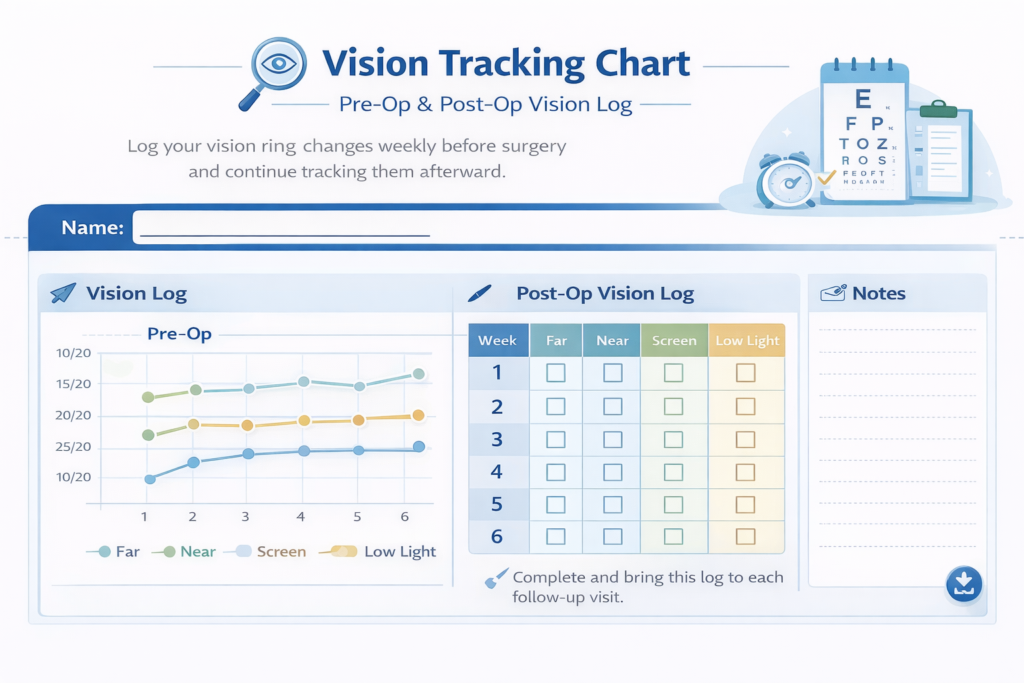
Before treatment, logging how your vision feels during reading, screen use, driving, or low light gives a clear baseline.
After treatment, short weekly notes help you recognise progress even on days when improvement feels subtle. Many patients only realise how far they’ve come when they look back.
A downloadable version of this log can be used digitally or printed, making it easy to share observations during follow-ups.
Why This Approach Matters
Modern vision correction isn’t just about technology, it’s about informed decisions, realistic expectations, and long-term confidence.
By combining decision guidance, recovery planning, and vision tracking, patients feel more involved in their own care and better prepared at every stage.
What Happens Next?
If you’re early in your journey, this guide helps you ask better questions. If you’re preparing for treatment, it helps you feel calm and ready. If you’ve already had surgery, it helps you understand your healing process.
Vision correction is not just a procedure, it’s a process. And the clearer that process feels, the better the outcome tends to be.